Photo: Matjaž Klemenc/UPRS
President of the Republic receives an honorary doctorate in international relations
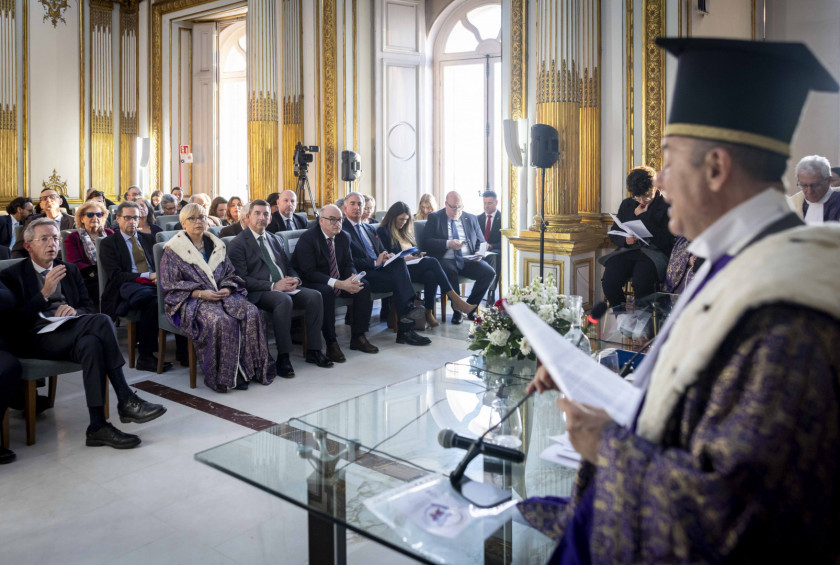
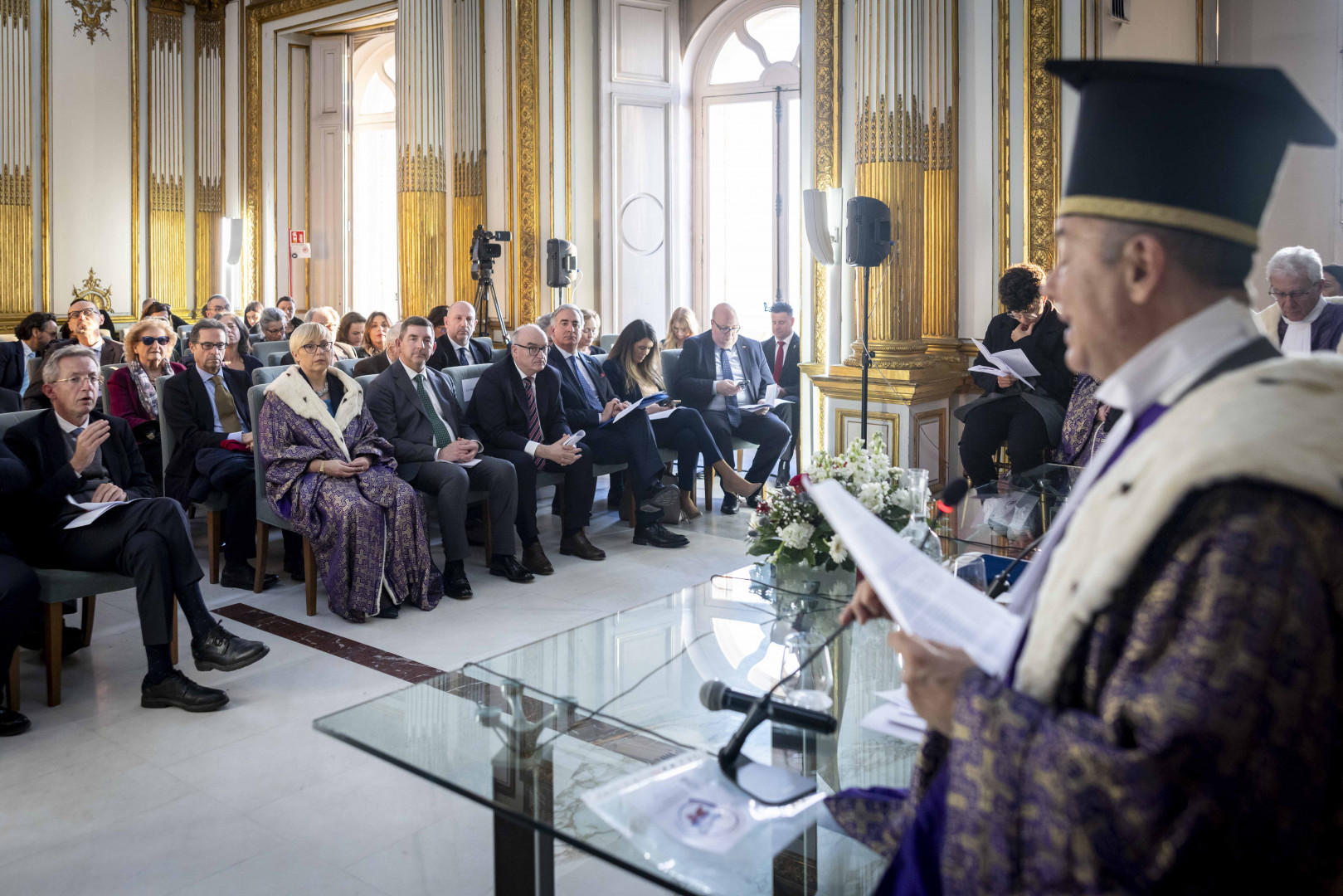
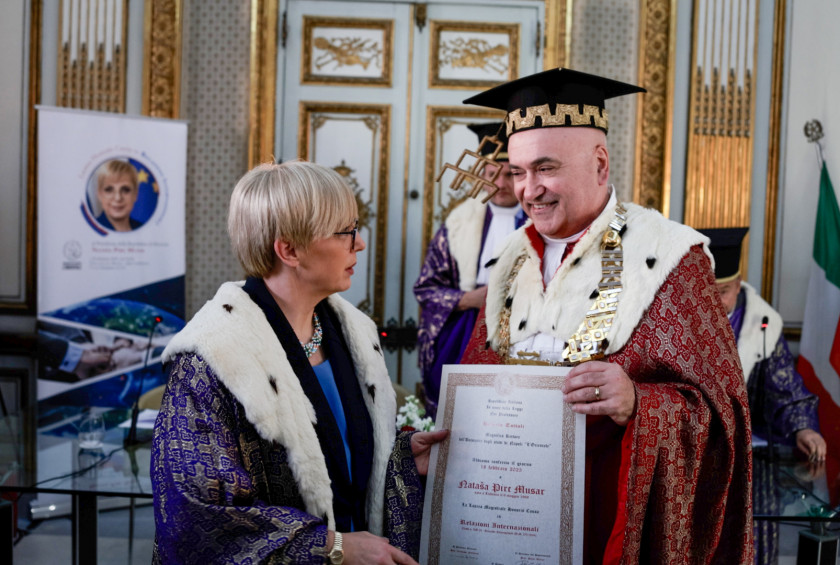
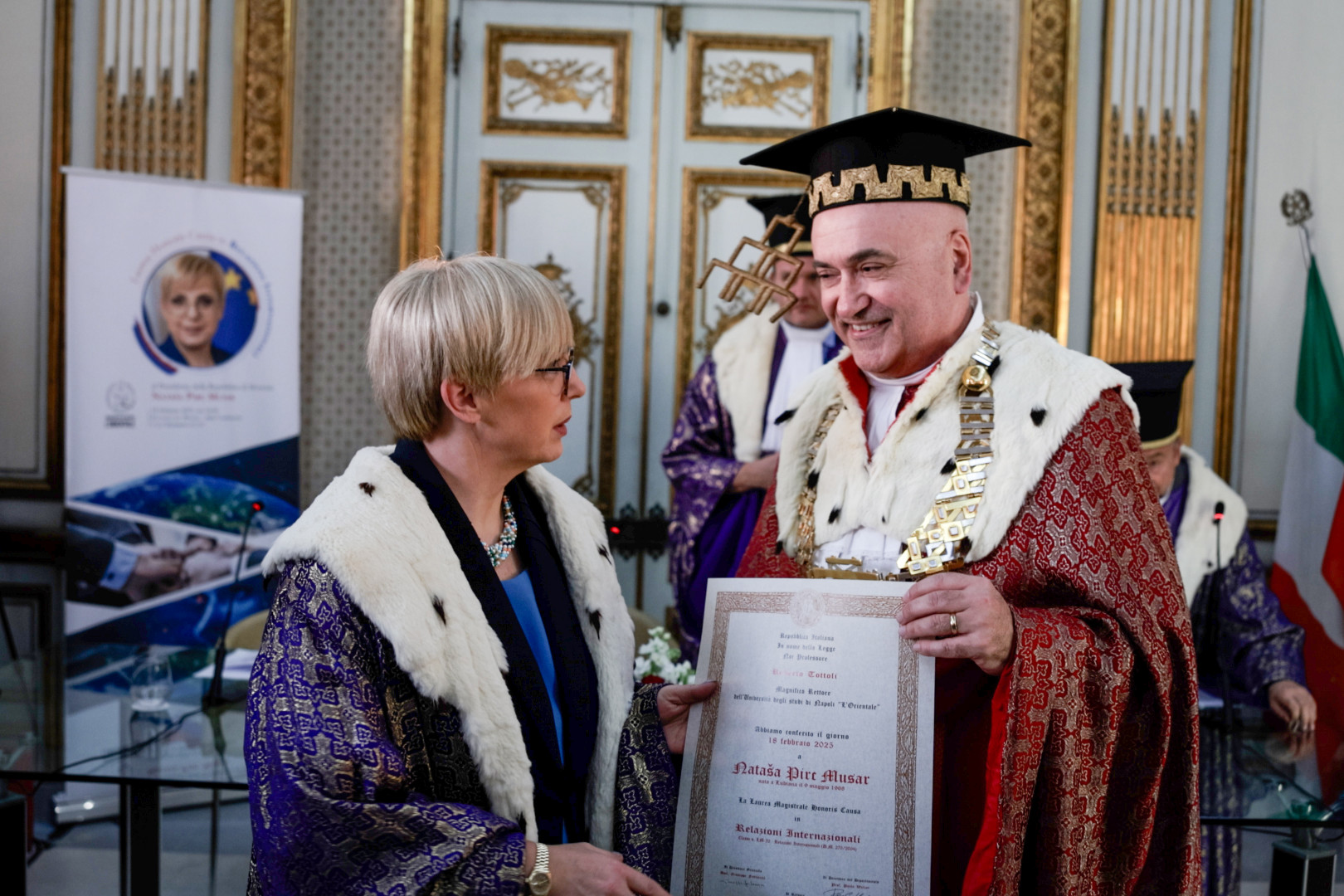
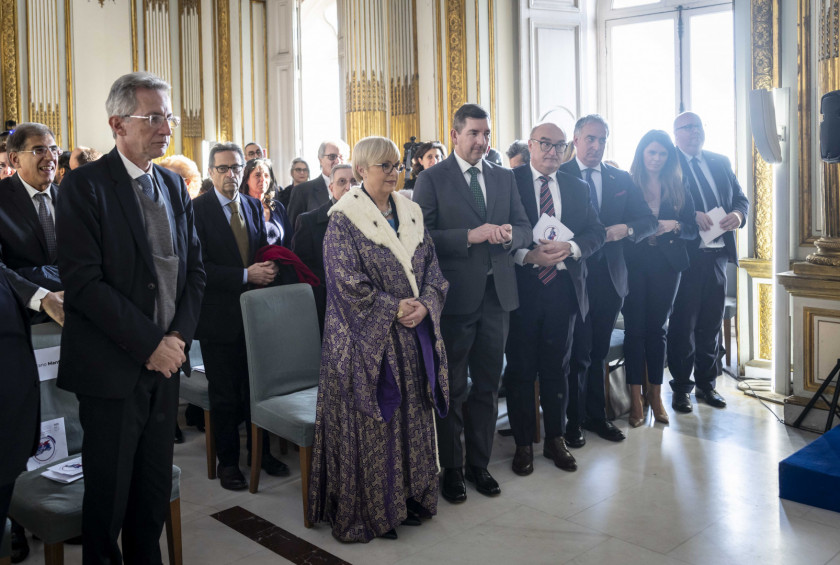
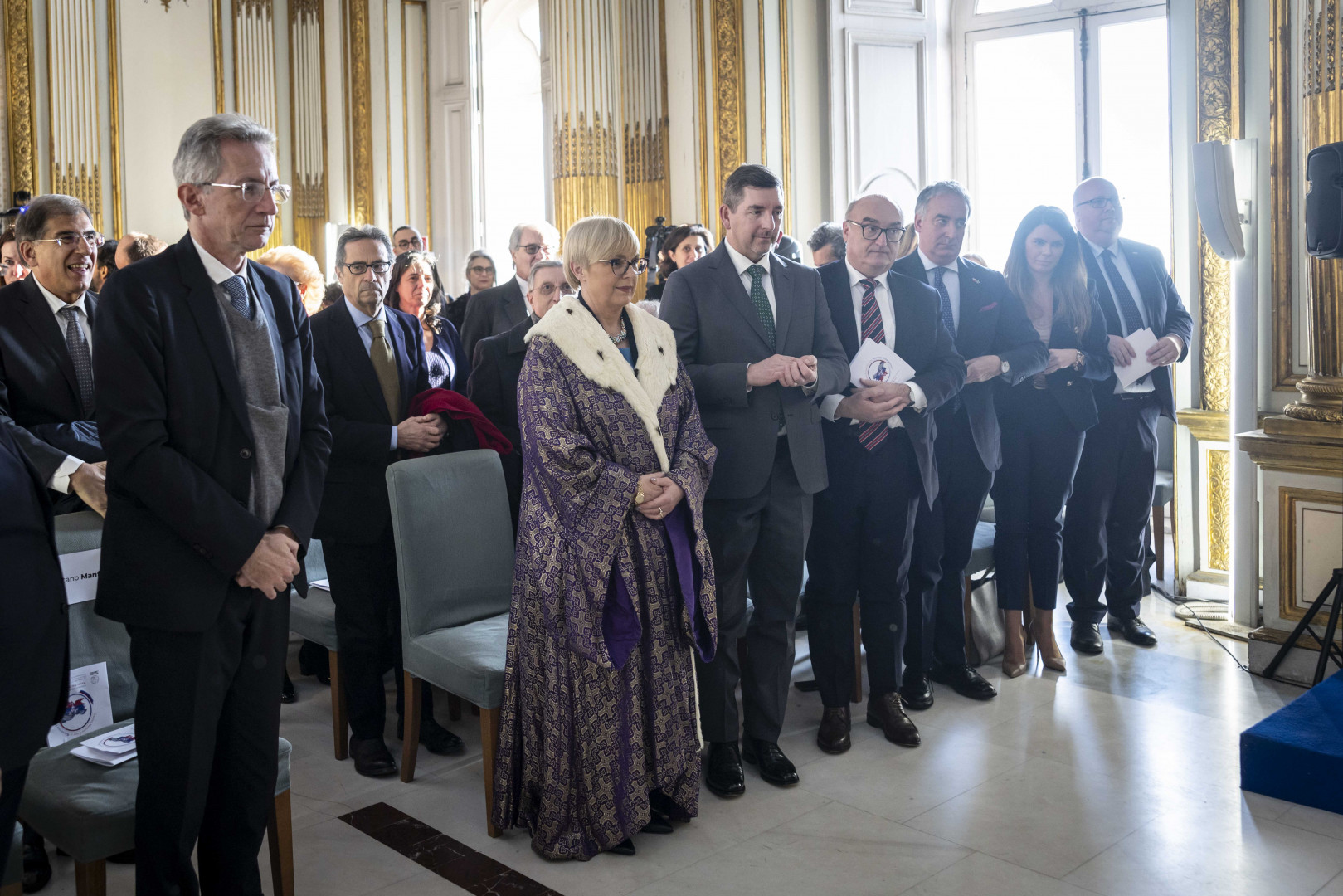
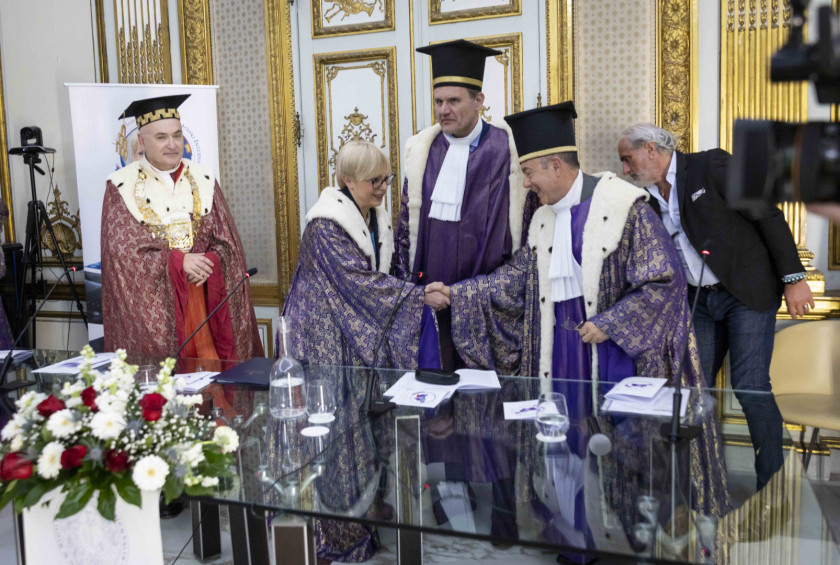
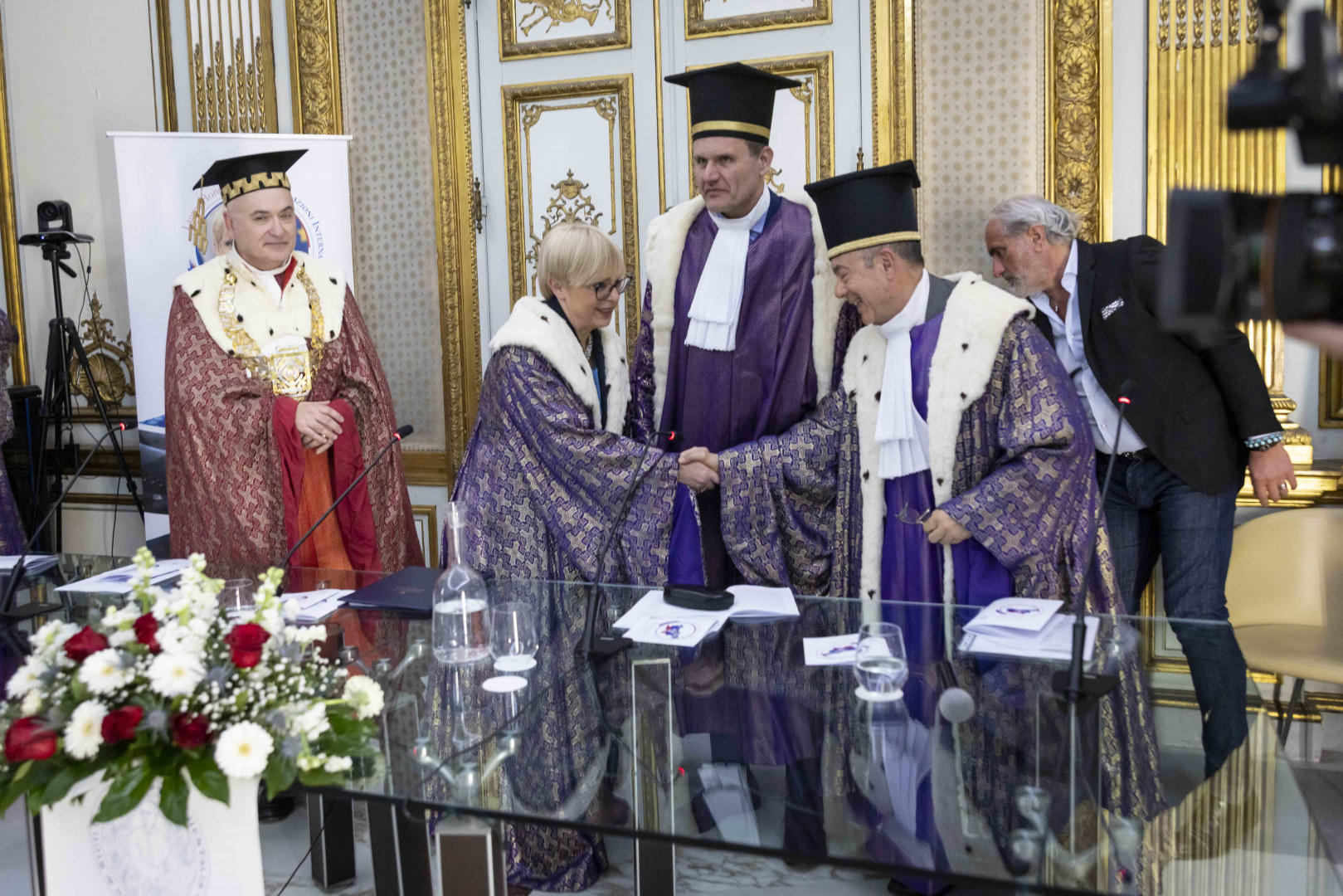
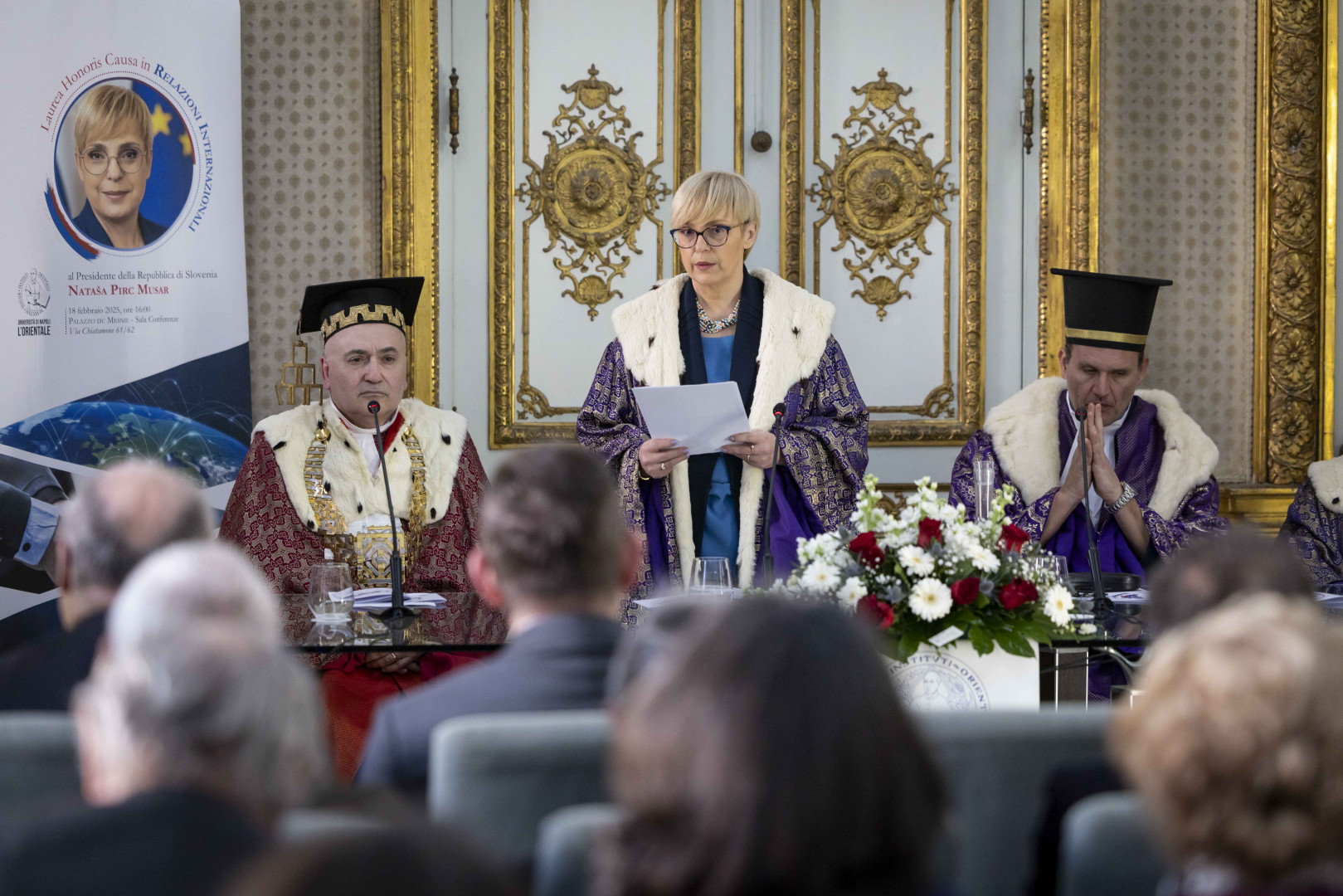
The President of the Republic of Slovenia, Nataša Pirc Musar, received an honorary doctorate in international relations (Laurea Honoris Causa in Relazioni Internazionali) from the University of Naples "L'Orientale". In their explanatory statement, the university representatives wrote that the award of the honorary doctorate to President Pirc Musar was a recognition of her outstanding contribution to the protection of human rights, freedom of expression and the right of the public to information, and that the ceremony was not only a tribute to her career, but also an opportunity to strengthen the ties between Italy and Slovenia.
Publish date Naples, Italy,
The University of Naples "L'Orientale" was founded in 1732 and is the oldest school of oriental studies in Europe. Initially, the studies were intended to support the activities of missionaries in the Far East. The University is particularly well-known for its study of languages, both Far Eastern and, from the very beginning, Mediterranean languages. In the 19th century, when the Orientale University became a state university after the unification of Italy, many other languages were added, including Persian, Hindi, Russian, and, 110 years ago, Slovenian. Thus it has been possible to study Slovenian in Naples since 1914. The many well-known recipients of honorary doctorates from the Orientale University include former Presidents François Mitterrand and Giorgio Napolitano, and conductor Riccardo Muti.
The honorary doctorate was presented to the President of the Republic of Slovenia by the Rector of the Orientale University, Prof. Roberto Tottoli, on behalf of the Orientale University. In his address, the Rector emphasised that the President's acceptance of the honorary degree was proof that the ties between Naples, Campania, Italy and Slovenia were growing stronger and that our two nations in the European Union were closer than ever before, set on the path of mutual understanding, cooperation and overcoming a sometimes difficult past. Professor of International Law Giuseppe Cataldi delivered the keynote speech, explaining the award of the honorary doctorate.
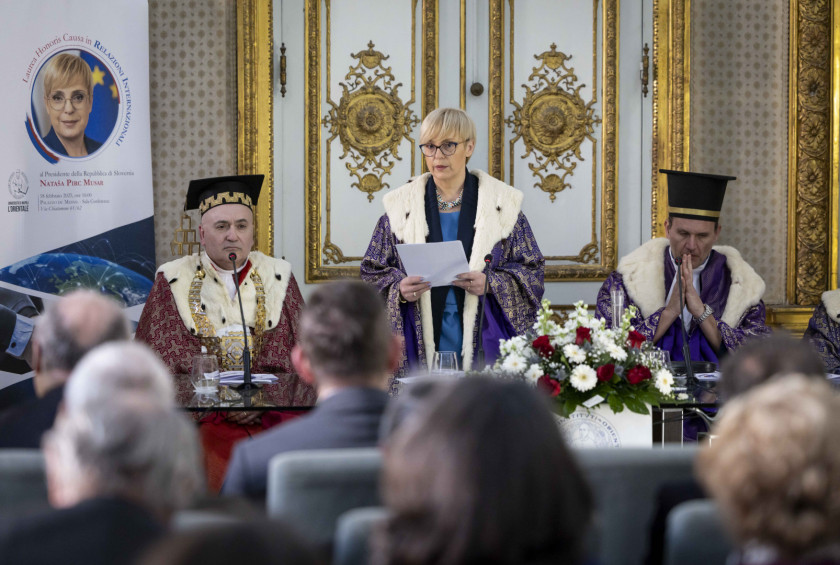
In her address, the President thanked the University of Naples "L'Orientale" and its representatives for the honour. She focused on the current situation in the international community, with an emphasis on the role of small and medium-sized nations. "I believe we can all agree that every human being has the right to live in a safe, clean and healthy environment. In a multipolar world – a world driven by the race for prestige and power – this right remains elusive. The pursuit of short-term gains and narrow interests comes at a significant cost. And the real concern is how high these costs may be. It is therefore our duty, especially for small and medium-sized nations, not to remain silent, not to wait passively for the outcome of major power rivalries, and not to stand idly by in the face of global crises and growing inequalities. By breaking the silence, we must speak out much more often and louder about the challenges we face – challenges that require nothing less than intergenerational reflection. Without inclusion, a peaceful future for us all is difficult to imagine," the President said.
She added that small and medium-sized nations were particularly vulnerable to such violence and indifference to international law. "During and before World War II, we were ourselves victims of fascism, Nazism and foreign occupation. For us, the 80th anniversary of the end of World War II is a solemn reminder and a commitment to do all we can to ensure that such horrors never happen to anyone else. We also recognise that in order to achieve a lasting peace, certain essential conditions must be met. This requires justice and equality in all areas. Equality must begin at the symbolic level."
"As statesmen, politicians, diplomats and opinion leaders, let us focus on developing an inclusive, long-term vision rooted in the values that define our common humanity, regardless of our differences. That is why inter-generational reflections or agreements on the future of our civilisation – whether on building peace, promoting economic cooperation, or protecting our environment and climate – should carry far greater weight than the many agreements to which we commit ourselves, but which we rarely implement fully or consistently. There is still time. But if we do not come together, time will run out. And when it does, future generations will judge us for our lack of responsibility," she said.
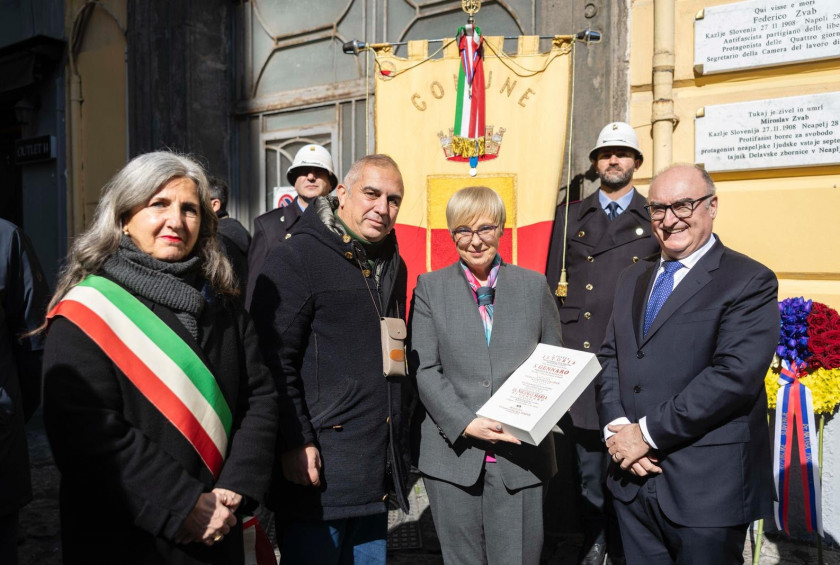
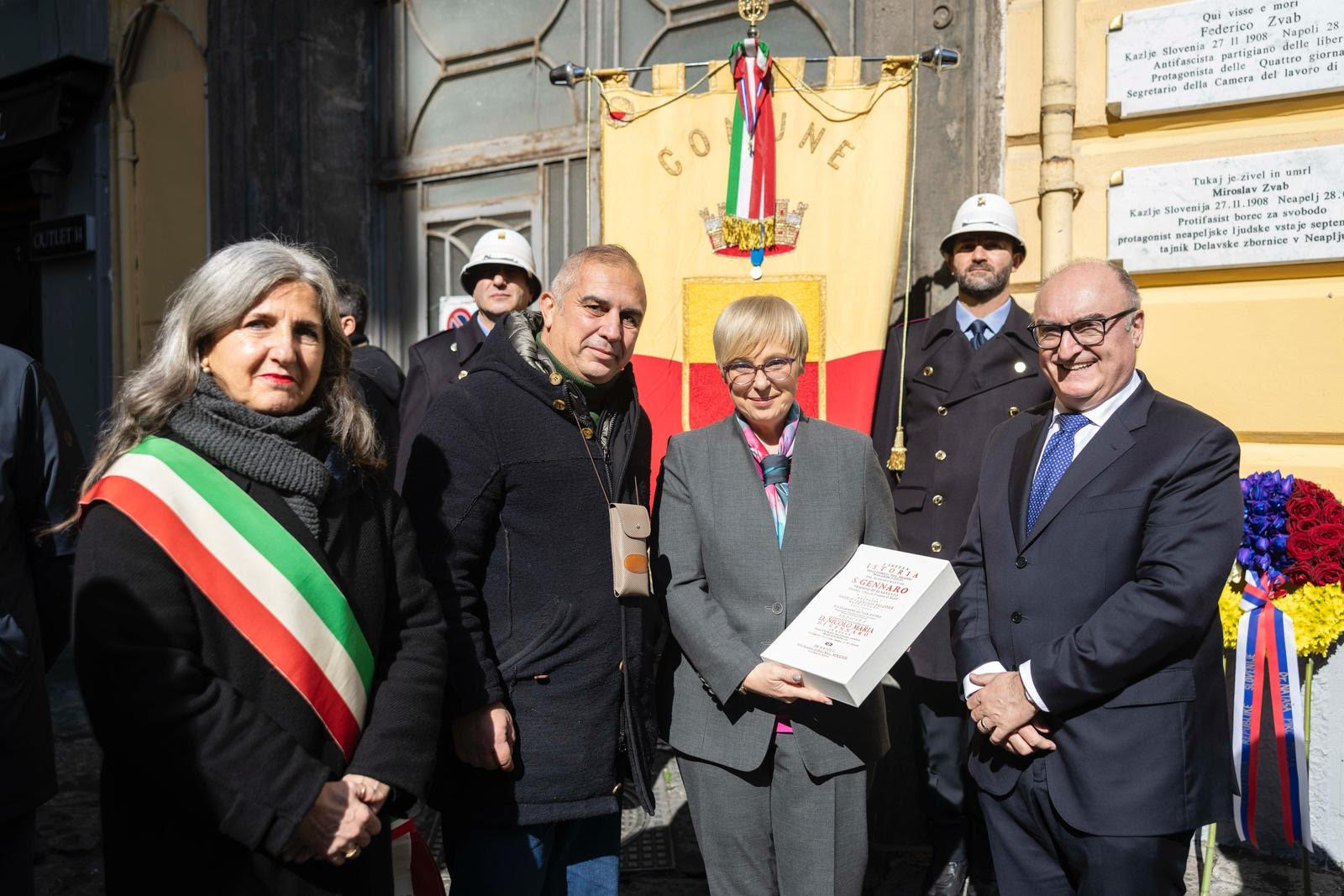
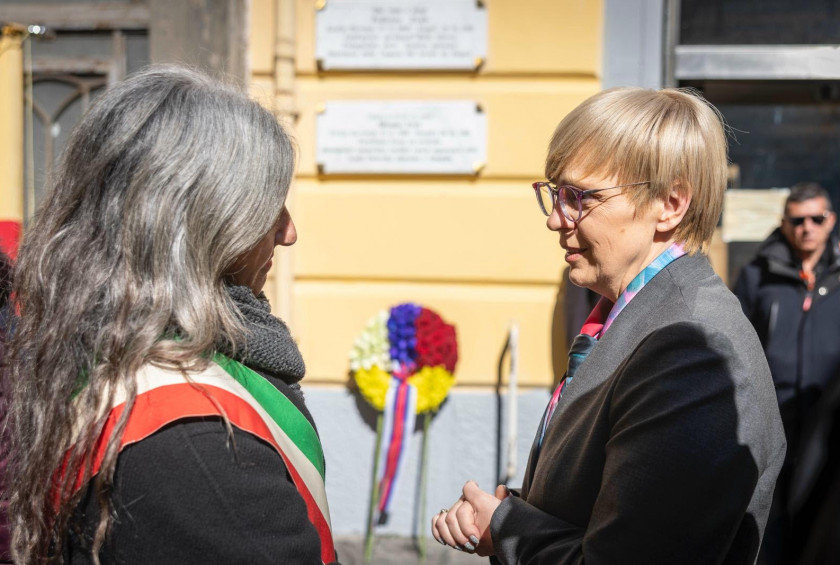
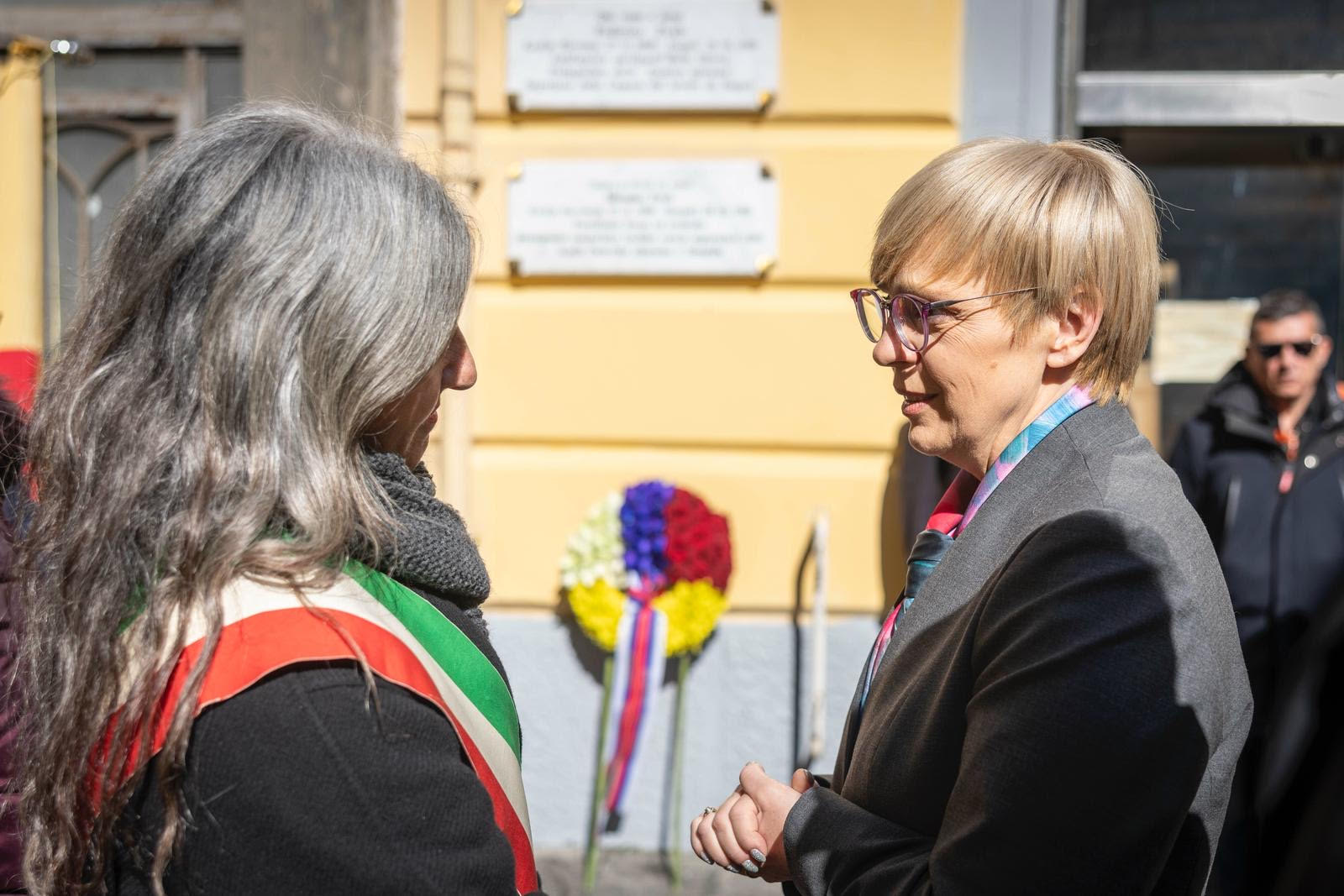
During her visit to Naples, the President laid flowers at a memorial plaque in memory of Miroslav Žvab, a Slovenian who led an uprising against the Germans in the central Neapolitan district of Vomero at the end of September 1943.