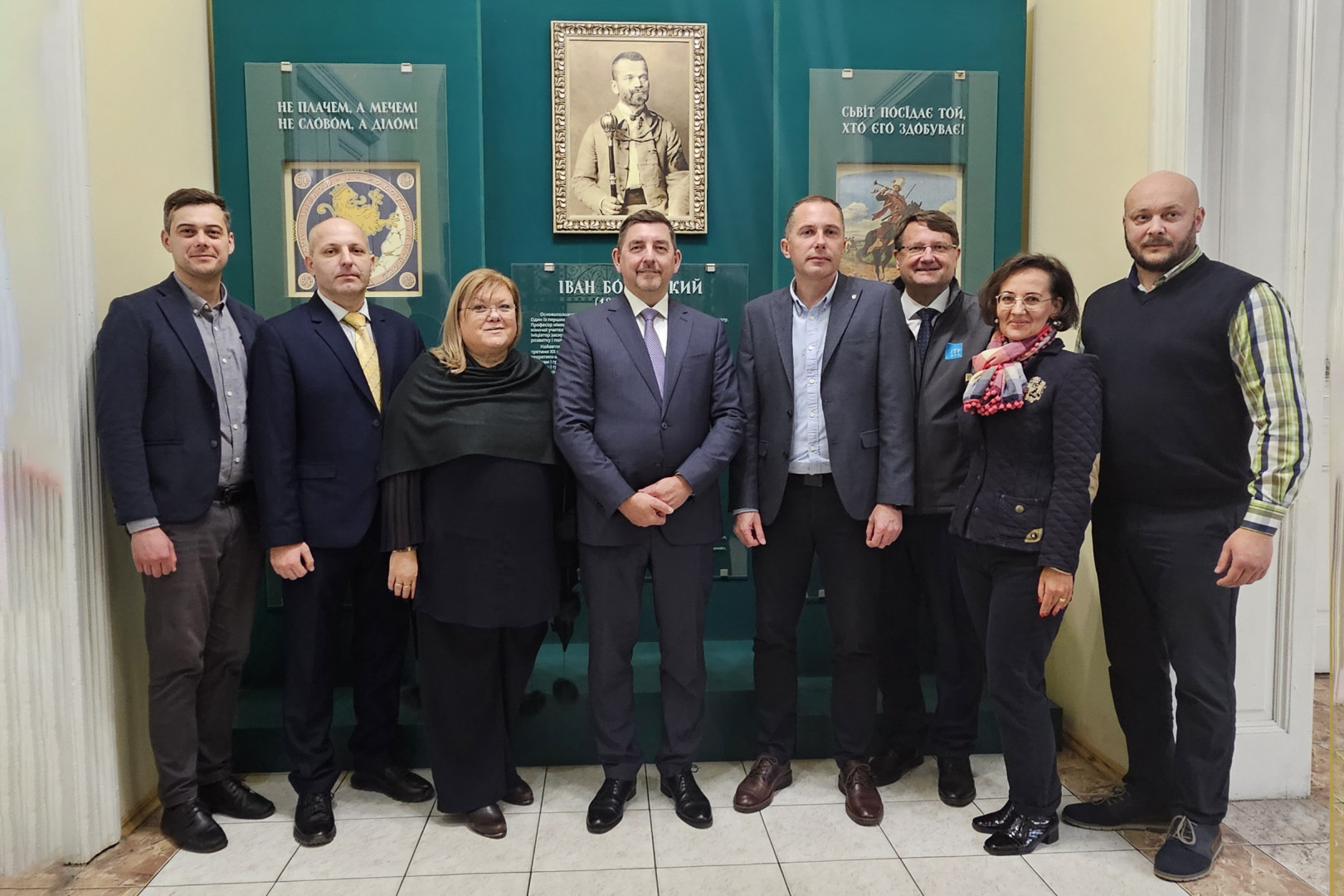
Photo: Office of the President of the Republic
Dr. Aleš Musar visits the Ivan Bobersky State University of Physical Culture in Lviv
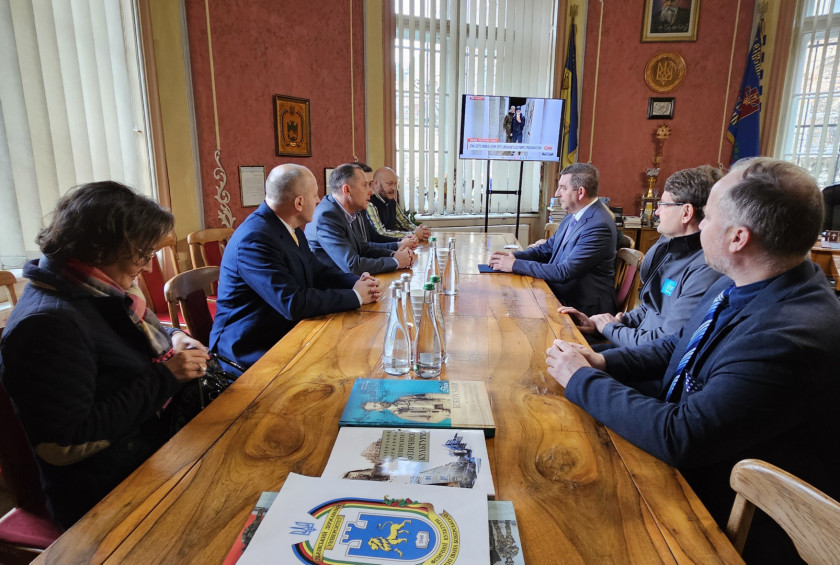
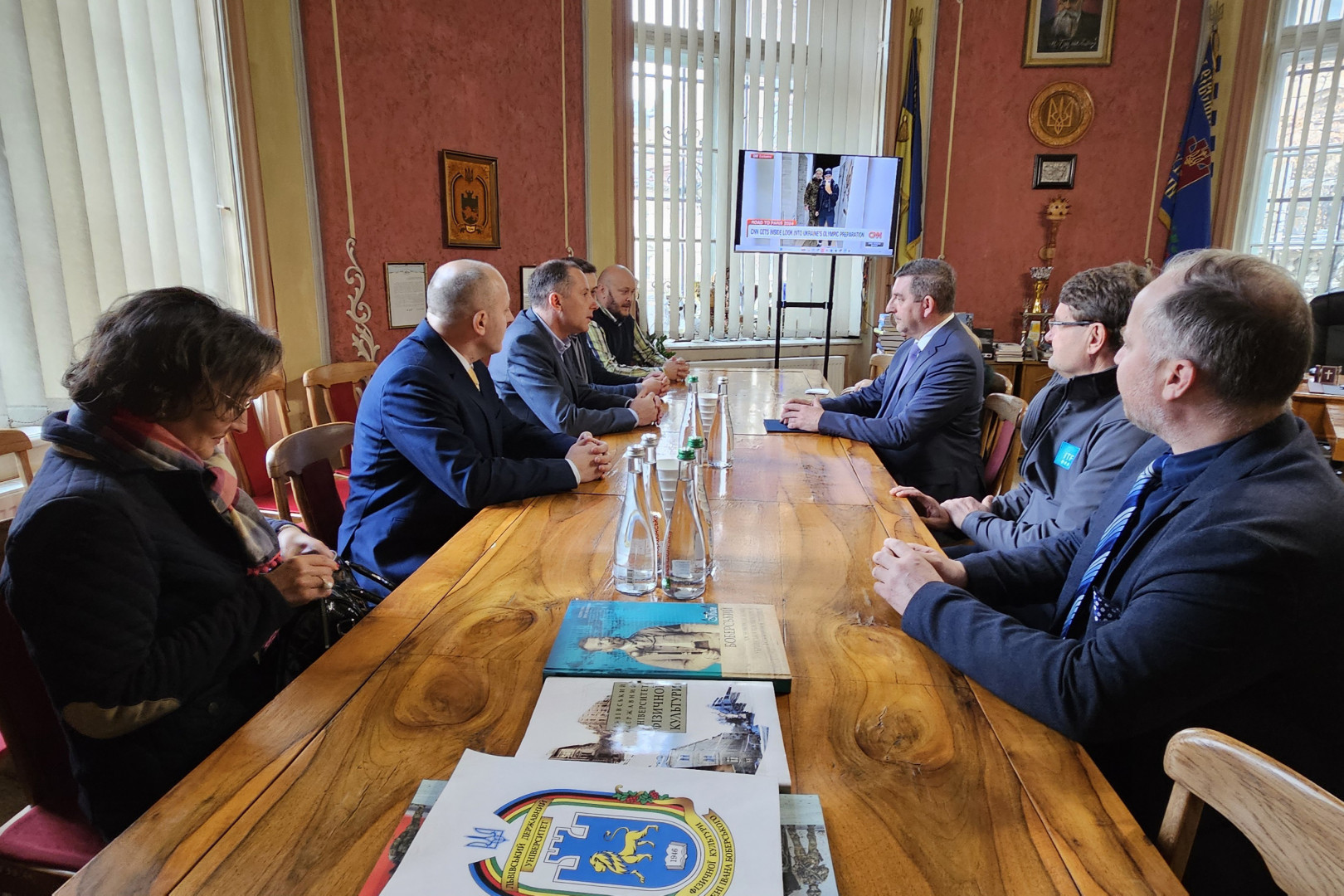
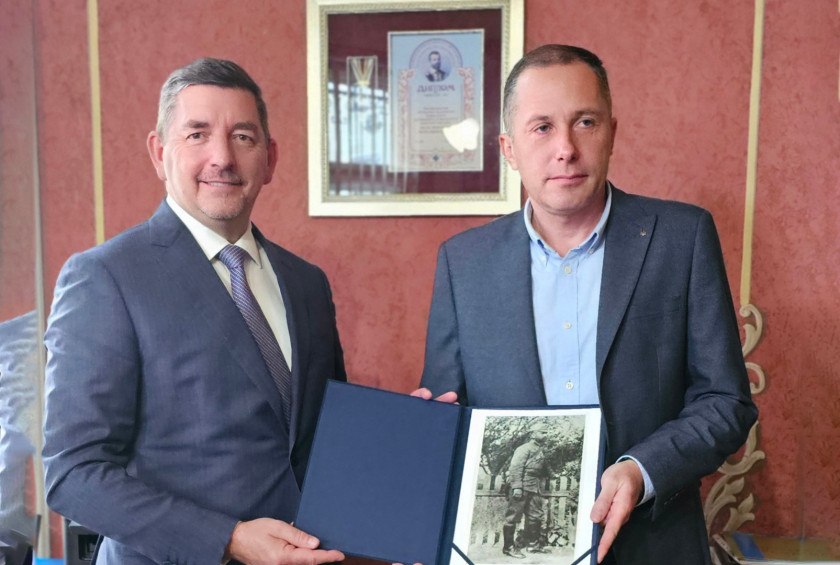
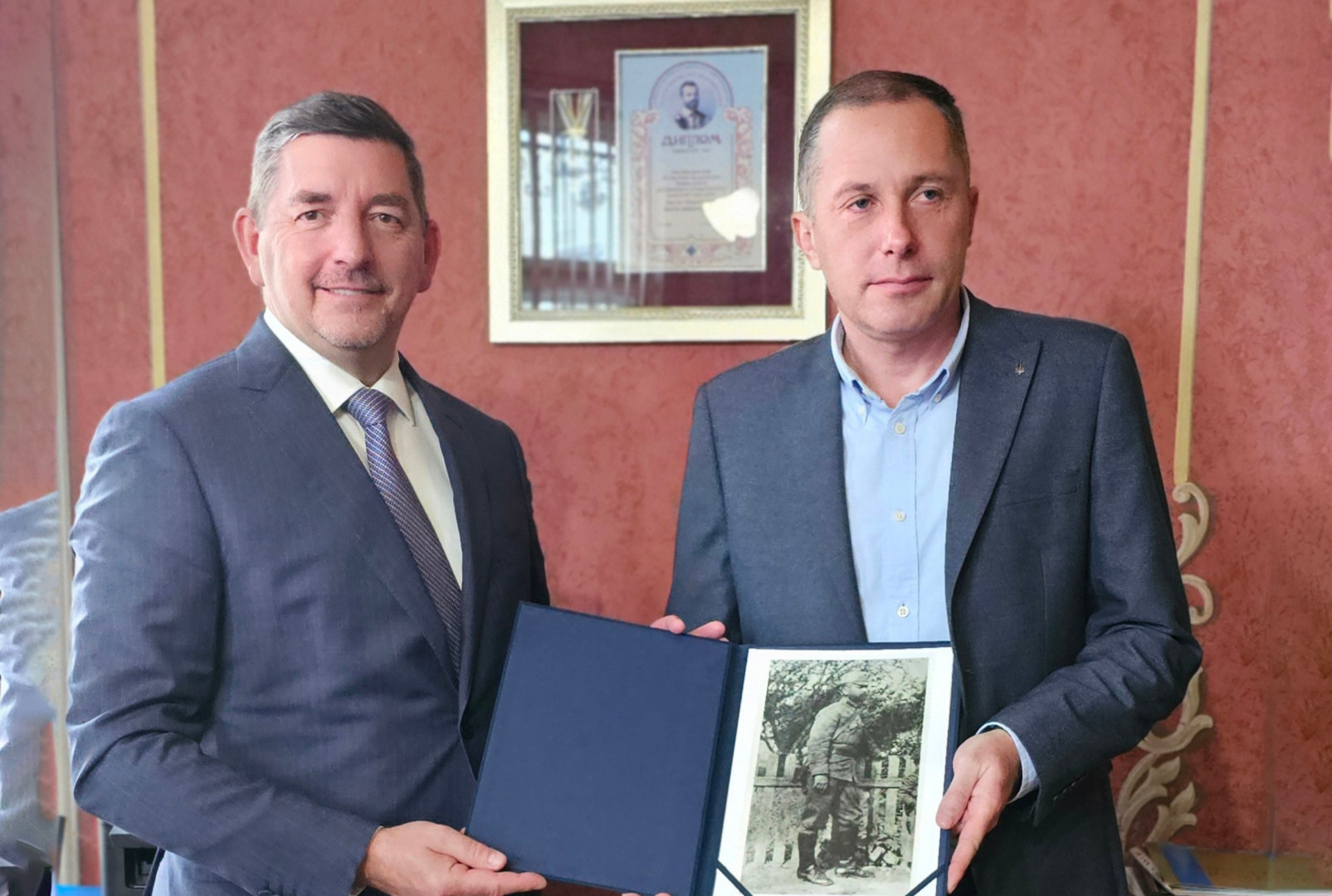
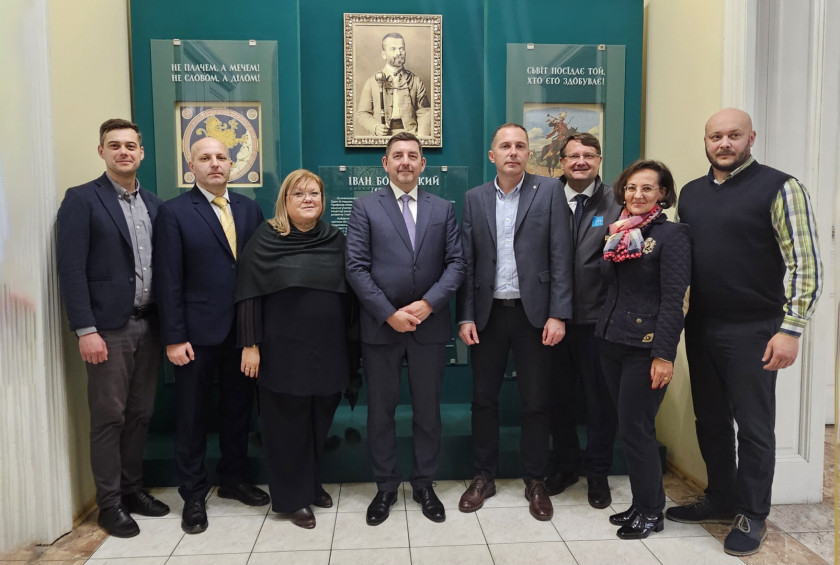
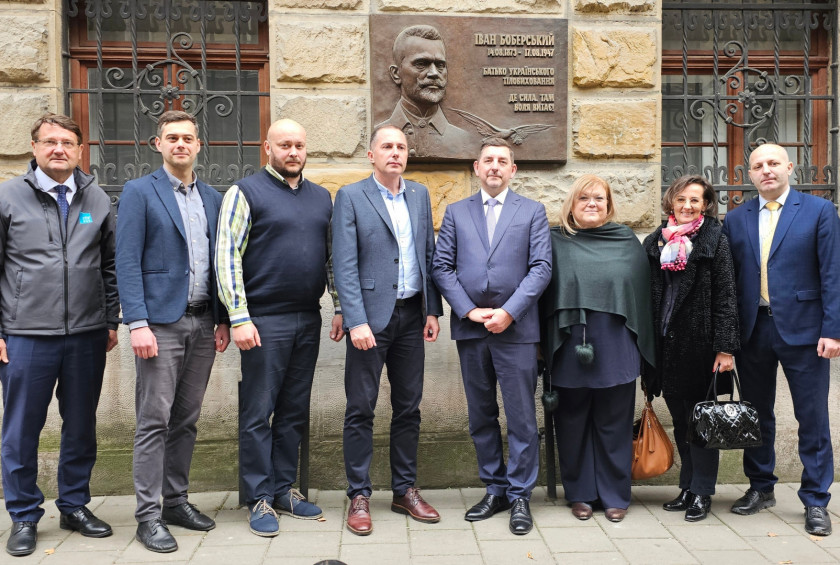
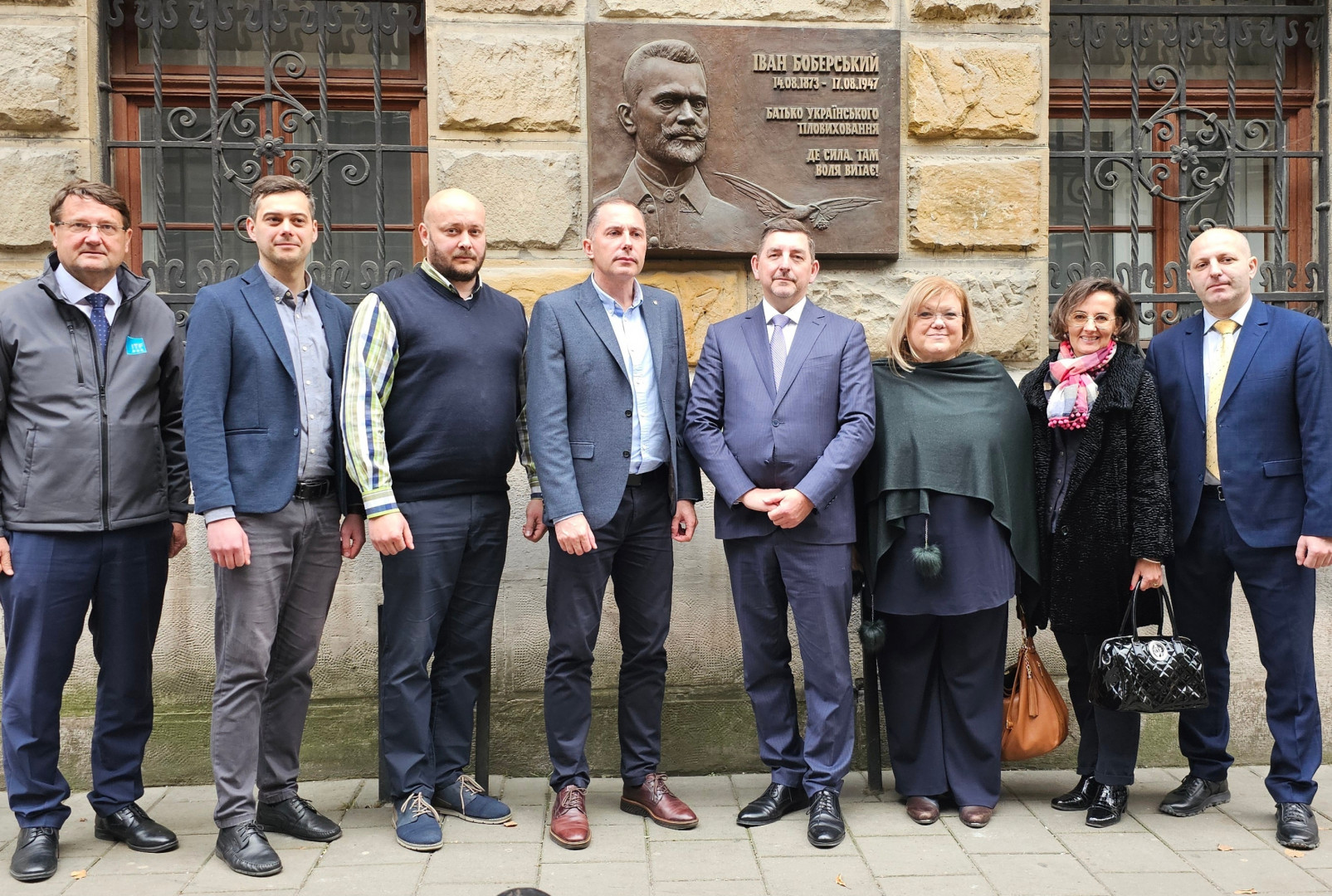
During his visit to Lviv, Ukraine, Dr. Aleš Musar, the spouse of the President of the Republic of Slovenia, visited the Ivan Bobersky State University of Physical Culture, where he was welcomed by the University’s Rector, Dr. Yaroslav Svishch, and his colleagues.
Publish date Lviv, Ukraine,
As Rector Svishch emphasized, the University is named after the leading Ukrainian pedagogue in the field of physical culture, Ivan Bobersky—an individual who played a significant role in the historical ties between Ukraine and Slovenia. Ivan Bobersky was a Ukrainian teacher and professor who popularized sports and physical education in his homeland as a means to awaken national consciousness. Due to his political activities, he lived in Slovenia, the homeland of his wife, from 1932 until his death in 1947.
Rector Svishch thanked Dr. Musar for his efforts in preserving the rich scientific legacy of Ivan Bobersky and for shedding light on this remarkable story, which further strengthens the connection between the two nations. This historical foundation is an excellent basis for deepening cooperation between universities and students today, especially in the wartime circumstances in which Ukraine finds itself due to Russia’s attack.
Dr. Musar noted that the extensive collection of Ivan Bobersky’s legacy, held by the National and University Library in Ljubljana, was also viewed together with the First Lady of Ukraine, Ms. Olena Zelenska, during her visit to Slovenia last year. The collection—forty cardboard boxes of notes, photographs, newspaper clippings, and journals of this significant Ukrainian figure—has only been partially researched. He therefore encouraged Ukrainian and Slovenian researchers to deepen their study and collaboration in examining this important heritage.
At the same time, this connection opens opportunities for even more joint projects and research involving students and professors from Slovenia and Ukraine. Also noteworthy is the University’s highly successful work in researching and promoting Paralympic sports. Slovenia and the humanitarian organization ITF support assistance programs for victims of mines and explosive remnants of war, where Paralympic sports serve as a form of psychosocial support—particularly important for young Ukrainian victims and the wounded.